Cardio for Fat Loss vs. Cardio for Body Composition: They're Not the Same Thing

For years, people have been told that if they want to lose fat, they need to do more cardio. Endless miles on the treadmill, long runs, and hours spent chasing a calorie burn have become the go-to strategy for many people trying to change their bodies.
But if your goal is improving body composition, the conversation gets a little more nuanced.
While fat loss and body composition are related, they are not the same thing. Understanding the difference can help you choose the right type and amount of cardio without sacrificing the muscle you've worked hard to build.
First, What's the Difference?
Fat loss simply means reducing body fat.
Body composition refers to the ratio of lean muscle mass to body fat. Someone may lose weight and fat while also losing muscle. The scale goes down, but their body composition may not improve significantly.
On the other hand, someone might stay the same weight, lose fat, gain muscle, and completely transform how they look and feel.
This is why I encourage clients to focus on body composition rather than just the number on the scale.
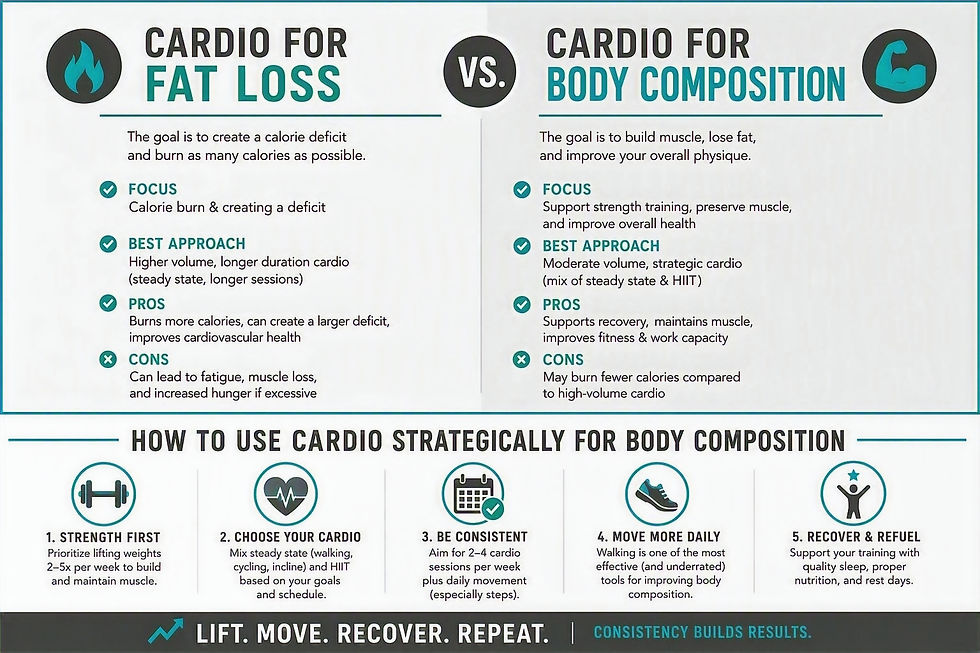
Cardio for Fat Loss
If your primary goal is to create a calorie deficit, cardio can be a useful tool.
Benefits of cardio for fat loss:
Increases daily calorie expenditure
Improves cardiovascular health
Can help create a calorie deficit without drastically cutting food intake
May improve recovery when performed at lower intensities
Potential drawbacks:
Excessive cardio can increase fatigue
It may interfere with strength training performance
Too much cardio paired with too little food can increase muscle loss
Can sometimes create an "earn your food" mindset that isn't sustainable
Many people fall into the trap of continuously adding more cardio when progress slows. The problem is that more isn't always better. If you're constantly exhausted, hungry, and struggling to recover from workouts, your body composition goals may actually suffer.
Cardio for Body Composition
When the goal shifts from simply losing weight to improving body composition, cardio becomes a supporting player rather than the star of the show.
Strength training is still the foundation because muscle is what gives your body shape, improves metabolism, and helps create that toned, athletic look many people are after.
In this approach, cardio is used to:
Support overall health
Improve work capacity
Enhance recovery
Increase daily energy expenditure
Improve endurance for daily activities and recreation
The goal is not to burn as many calories as possible. The goal is to complement your strength training while preserving or building muscle.
The Pros of Incorporating Cardio
Improved Heart Health
Your heart is a muscle too. Regular cardiovascular exercise can lower blood pressure, improve circulation, and reduce the risk of cardiovascular disease.
Better Recovery
Low-to-moderate intensity cardio increases blood flow, which may help reduce soreness and improve recovery between training sessions.
Increased Daily Calorie Burn
Cardio allows you to increase overall activity levels without needing to dramatically reduce calories.
Improved Endurance
Whether you're chasing kids, hiking, participating in a Couch to 5K, or simply wanting more energy throughout the day, cardiovascular fitness matters.
The Cons of Too Much Cardio
Recovery Can Become a Problem
If you're doing intense cardio multiple times per week while also lifting weights, your body may struggle to recover.
Risk of Muscle Loss
When cardio volume becomes excessive, especially during aggressive dieting phases, the body can lose muscle along with fat.
Increased Hunger
Some people find high-volume cardio significantly increases appetite, making it harder to maintain a calorie deficit.
It Can Become Time-Consuming
Many people mistakenly believe they need hours of cardio each week. In reality, a well-designed strength program paired with strategic cardio is often more effective.
So How Much Cardio Do You Actually Need?
The answer depends on your goals.
If your goal is overall health:
Aim for 150 minutes of moderate-intensity cardio each week.
If your goal is body composition:
Prioritize strength training 2-5 days per week.
Add 2-4 cardio sessions based on recovery and schedule.
Include plenty of daily movement such as walking.
My favorite recommendation for most people is simple:
Lift weights consistently, walk often, and use cardio strategically.
Walking is one of the most underrated tools for improving body composition. It burns calories, improves cardiovascular health, supports recovery, and doesn't beat up your joints or interfere with strength gains.
The Bottom Line
Cardio isn't the enemy, and strength training isn't the entire answer.
If your goal is pure fat loss, cardio can help create a calorie deficit. But if your goal is improving body composition, cardio should support your strength training rather than compete with it.
The best program is rarely the one that burns the most calories. It's the one you can recover from, stay consistent with, and maintain long-term.
Because at the end of the day, the body that changes the most isn't built through one killer workout. It's built through months and years of showing up, training smart, and staying consistent.
Remember: Don't just chase a smaller body. Build a stronger one.
-By Yvonne Lawrence, Owner & Coach — North Side Strength & Fitness


Comments